

Alzheimer’s today: diagnosis, treatment, and services for patients and families


World Alzheimer’s Day is observed on September 21st—an opportunity to draw attention to a disease that affects not only those who receive a diagnosis, but also their families and caregivers, and to remember how vital research, information, and appropriate care management are throughout the entire journey.
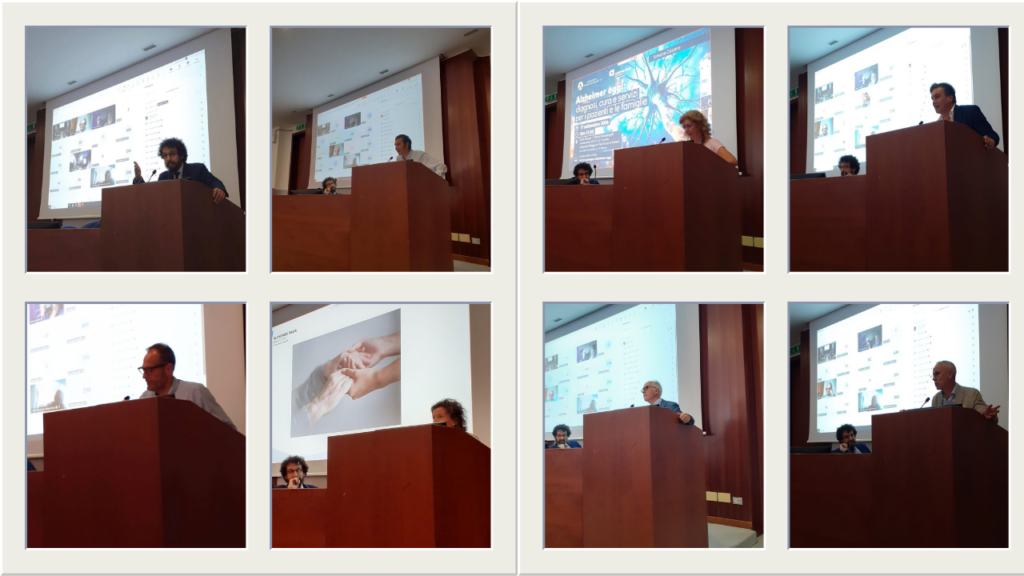
Ahead of this observance, on September 17th, the Associazione “Centro Dino Ferrari” ETS hosted the event “Alzheimer’s today: diagnosis, treatment, and services for patients and families” at the Fondazione IRCCS Ca’ Granda Ospedale Maggiore Policlinico in Milan. The large turnout, both in person and online, confirmed how deeply felt this topic is and how crucial it is to create opportunities for discussion that provide practical information and tools to patients, families, and caregivers.
The meeting opened with institutional welcome remarks from President Marco Giachetti, Medical Director Nicola Orfeo, Scientific Director Fabio Blandini, Director of the Department of Neuroscience and Mental Health Paolo Brambilla, and Director of Geriatrics Tiziano Lucchi. From these opening words, the central theme of the day emerged: placing the individual at the center by focusing not only on diagnosis and therapies, but also on autonomy, vulnerability, psychological well-being, and social needs.
Regarding diagnosis and new therapeutic perspectives, Dr. Andrea Arighi, neurologist and Director of the Simple Departmental Unit (SSD) for Neurodegenerative Diseases at the Policlinico di Milano, highlighted the profound changes currently reshaping Alzheimer’s care. Thanks to biomarkers, it is now possible to identify the biological processes of the disease at increasingly earlier stages—through cerebrospinal fluid and, progressively, via blood tests. An earlier biological diagnosis opens up new therapeutic possibilities, ranging from symptomatic treatments to novel anti-amyloid therapies, while making intervention in prevention and modifiable risk factors even more critical.
However, diagnosis must be accompanied by comprehensive care that addresses the whole person. Dr. Simona Ciccone, from the Simple Departmental Unit (SSD) for Geriatrics at the Policlinico di Milano, focused on this aspect, delving into the role of the Multidimensionale Geriatric Assessment (VMD). Evaluating clinical, functional, psychological, and social needs together allows for the creation of a tailored care pathway aimed at preserving autonomy and quality of life as much as possible.
This comprehensive care extends beyond the hospital through connections with local community services. Jacopo Bordoni, from the Complex Operative Unit (SC) Medical Direction – Social Work Service of the Policlinico di Milano, outlined the tools available to patients and families—ranging from guidance on civil disability, attendance allowances, and Law 104/92, to home care services, Community Houses (Case di Comunità), and legal protection measures. Indeed, building a network between the hospital and the local community is essential to ensure continuity of care and to support those who provide daily care to individuals with dementia.
The presentation by Dr. Francesca Arosio from Alzheimer Milano ODV was dedicated specifically to caregivers, highlighting how a diagnosis of dementia can profoundly alter family dynamics, roles, and relationships. Supporting caregivers means guiding them as they balance caring for their loved one with caring for themselves, while also recognizing what the person with dementia can still do, choose, and share—preserving the relationship beyond the illness.
The presentations thus offered distinct yet closely interconnected perspectives, demonstrating how a multidisciplinary approach is essential in managing Alzheimer’s disease: research, diagnosis, therapies, care, and social support must communicate with one another and converge around the individual and their family.
This principle was given concrete form during the closing listening sessions, where neurologists, geriatricians, psychologists, social workers, dentists, occupational therapists, nutritionists, and patient associations met directly with participants to answer questions and provide a space for guidance and dialogue.
A heartfelt thank you goes out to all the participating professionals, to the Fondazione IRCCS Ca’ Granda Ospedale Maggiore Policlinico di Milano, to Alzheimer Milano ODV for their valuable contribution, and to everyone who attended, both in person and online.
On World Alzheimer’s Day, the insights from this gathering reaffirm a fundamental commitment: to keep advancing research while simultaneously building care and support pathways that are ever closer to patients and their families.
Support the research