

45 Years of the “Centro Dino Ferrari”: Research, Innovation, and New Perspectives for Patients


In the cultural heart of Milan, at the Gallerie d’Italia, the “Centro Dino Ferrari” of the University of Milan – Policlinico Hospital celebrated forty-five years of activity: a milestone that reflects over four decades of commitment to research into neuromuscular, neurodegenerative, and cerebrovascular diseases. The Center was founded and established by Ing. Enzo Ferrari in memory of his son, Dino.
The evening was an opportunity to review the results achieved and share the challenges that await the future of research, thanks to the contribution of doctors, researchers, supporters, and institutions that have been working alongside the Center for years in its mission: to transform scientific discoveries into new treatment opportunities for patients.
On the occasion of the event, Il Giornale d’Italia interviewed several of the figures who contribute daily to the growth of the “Centro Dino Ferrari,” gathering reflections and perspectives on ongoing projects.
Among the most significant prospects that emerged during the interviews is the expansion of space dedicated to research. Marco Giachetti, President of the Policlinico di Milano, illustrated the project involving the Via Pace area, which is destined to become one of the most important biomedical research hubs in the country.
«The entire Via Pace area will be expanded to become the largest research laboratory of any Scientific Institute for Research, Hospitalization, and Healthcare (IRCCS) in Italy. We will have a thousand new square meters dedicated to neuroscience, within which there will be space for the “Centro Dino Ferrari”»
Alongside the new spaces, the evening also highlighted recent progress in the field of therapies. Professor Giacomo Comi, Director of the Neurology Department, recalled in particular the significant result achieved in the field of Duchenne muscular dystrophy.
«There is extremely significant progress in Duchenne muscular dystrophy: a new drug will be launched next week. We are proud that the “Centro Dino Ferrari” has collaborated from the beginning on the development of this therapy.»
The theme of new therapeutic strategies was also explored by Professor Stefania Corti, Director of the Neuromuscular and Rare Diseases Neurology Unit, who emphasized the progress made in recent years in the field of neurogenetic and neuromuscular diseases, thanks to the development of molecular, gene, and cell therapy approaches.
«In recent years, neurogenetic and neuromuscular diseases have seen significant therapeutic progress. Some new therapies are already available in clinical practice, and others are on the horizon.»
Finally, the focus turned to the future of neuroscience and the growing integration of new technologies in research. Dr. Andrea Arighi, Director of the Neurodegenerative Diseases Unit, described projects dedicated to the study of Alzheimer’s, the prevention of neurodegenerative diseases, and the increasingly strategic role of artificial intelligence.
«Research is moving forward by leaps and bounds, and artificial intelligence has given a major boost to innovation. I hope that in the next five years, many new developments will arrive, both therapeutic and diagnostic.»
The words collected during the evening convey the sense of an endeavor that continues to evolve: new spaces, new therapies, increasingly advanced technologies, and a shared vision oriented toward patient needs. Forty-five years of research have helped build knowledge, skills, and treatment opportunities that today look toward the future with renewed confidence. A journey that continues thanks to the work of researchers and clinicians and the support of those who have always chosen to stand by research.
The funds raised will be used to finance the purchase of a latest-generation Genetic Sequencer for faster and more precise genetic diagnoses.- A new sequencer for faster and more accurate genetic diagnoses – Centro Dino Ferrari
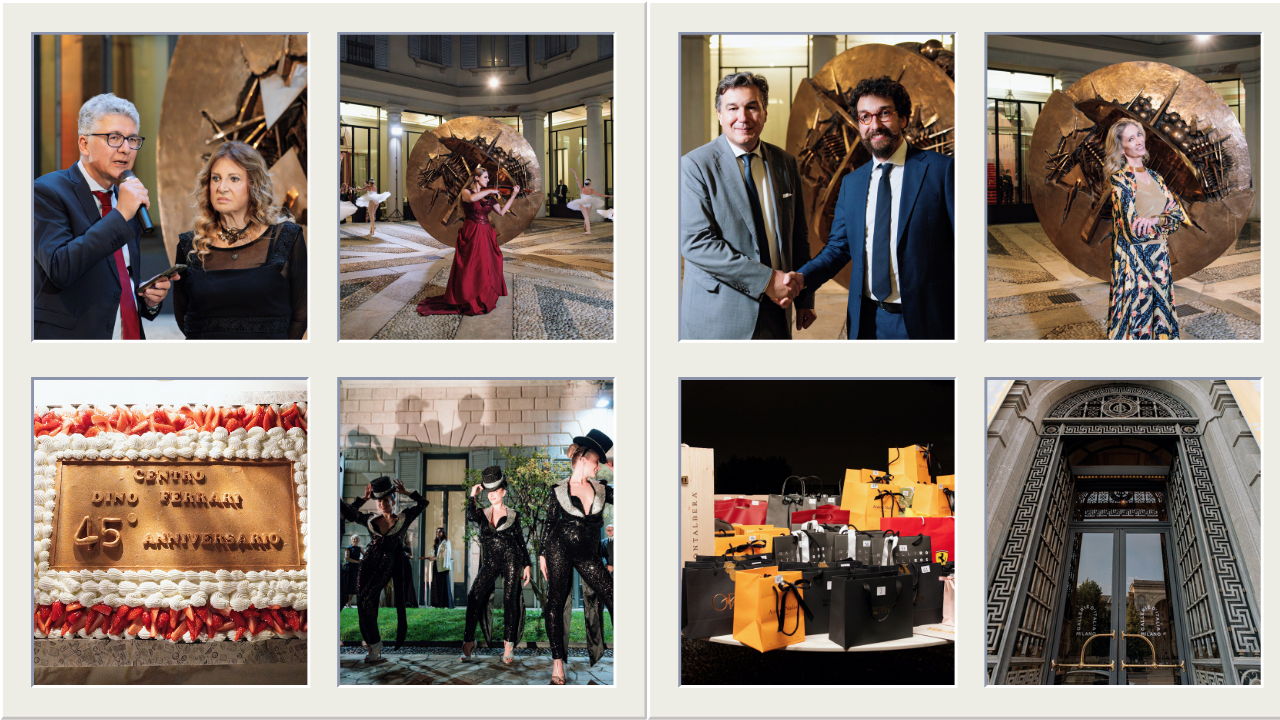
We extend our heartfelt thanks to our Ambassador Jessica Rampezzotti and the godmother of the evening, Laura Morino, as well as:
MAIN SPONSOR
SPONSOR
Ed inoltre
A special thanks for their generous contributions to the charity raffle goes to:
And to all the participating brands:
@bossdellesupercar @stzluxuryrent

Support the research