

Being a Scientist Today: Between Dreams, Challenges, and the Desire to Make a Mark


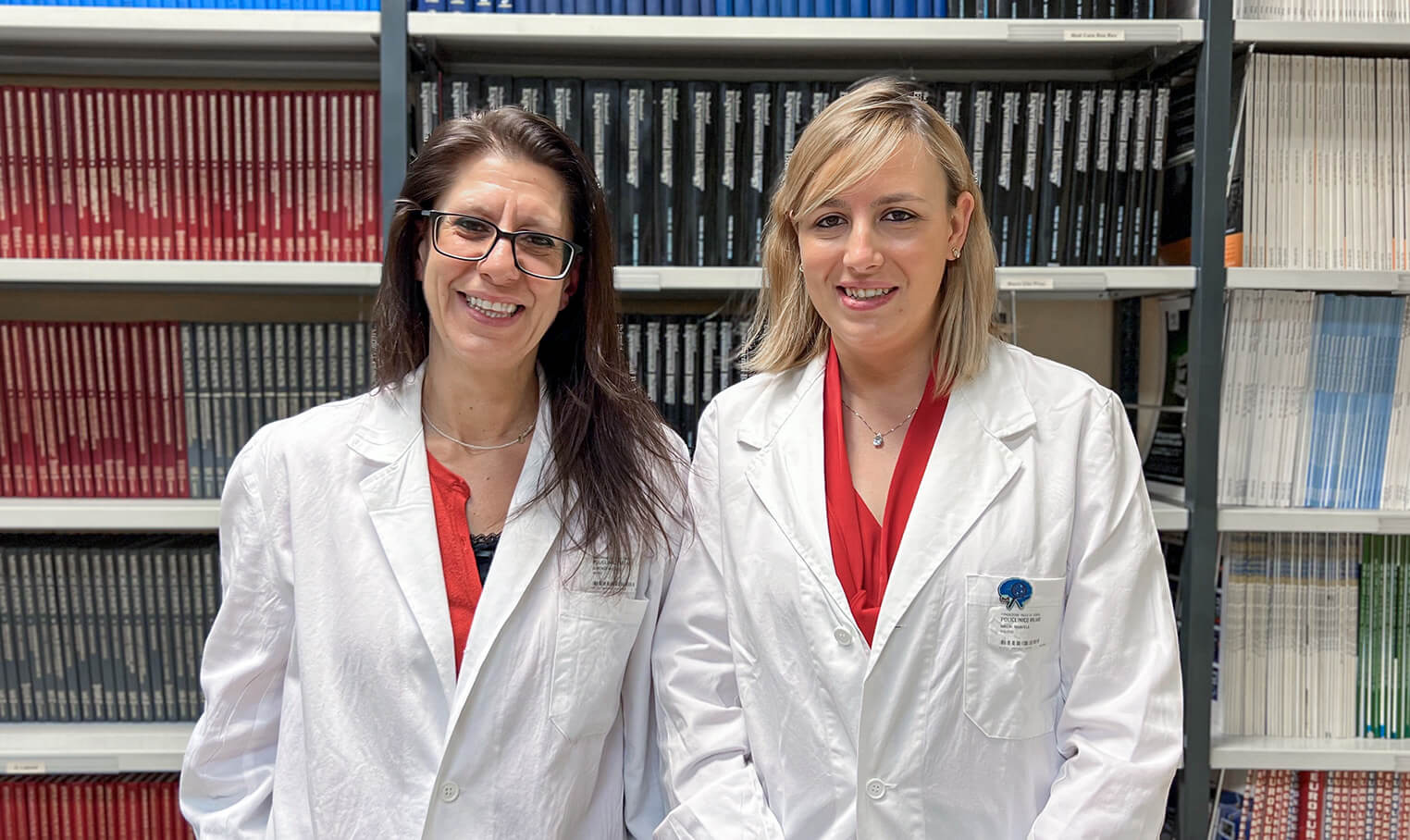
On February 11, we celebrate the International Day of Women and Girls in Science, an occasion to recognize the fundamental contribution of women in research and to inspire new generations to follow this path. To give a voice to those who work every day with passion in the scientific world, we interviewed two of our researchers, Valeria Parente and Manuela Magni.
Their experiences tell us about a science that is action, curiosity, and the desire to make a difference, with a shared goal: improving the lives of patients and their families.
Discover their journey, the motivations that led them to research, and their advice for the young scientists of tomorrow.
Watch the video and read the full interview!
What inspired you to choose a scientific career?
Valeria Parente: I didn’t have a single “aha” moment. I’ve always been very curious and eager to learn and discover new things. I enrolled in Biology because it seemed to fit my nature, but at first, I was mainly driven by a passion for studying. The passion for research came later, when I first set foot in a laboratory during my thesis: that’s when the real magic began. I was excited to plan experiments, put ideas into practice, observe results, analyze data, and see whether the initial hypothesis held up or if I needed to start over and explore new paths. It was like solving a puzzle, where each piece added to the understanding of something bigger.
Manuela Magni: Since I was little, the world of science has always fascinated me: understanding how a particular cell works and its function. During my school years, my grandmother was diagnosed with Parkinson’s disease, and that inspired me to pursue a career in research, with the goal of studying the cellular and molecular mechanisms underlying this condition. I also owe a lot to my mentors, who guided me through my studies and passed on their passion and the importance of research in studying neurodegenerative diseases.
What is your current role in research?
Valeria Parente: I am a Study Coordinator. My main role is to manage and coordinate clinical studies, which aim to evaluate the safety and efficacy of new therapeutic approaches before they are made available to patients. I organize and supervise all phases of the studies, from initial planning to data collection and analysis, ensuring that every activity follows regulations, ethical guidelines, and quality standards. I work closely with a multidisciplinary team to ensure the study proceeds efficiently and that patients receive the best care. I also ensure all documentation is accurate and maintain constant communication with ethics committees and regulatory authorities.
Manuela Magni: I study neurodegenerative diseases, such as Parkinson’s disease, through the development of patient-derived three-dimensional cellular models. These 3D models, called brain organoids, allow a deeper study of disease progression and are patient-specific.
What do you love most about your work?
Manuela Magni: Collaboration. At every meeting and conference, I love exchanging ideas with other passionate researchers and building new collaborations. I also love the wonderful feeling when I meet people who appreciate and understand the importance of the work we do.
What motivates you to continue every day despite the challenges?
Valeria Parente: Knowing that my work has a real impact. Results are never immediate, but thinking that my efforts could help someone live better, or even save their life, gives me the motivation to keep going. Knowing that, in my small way, I am doing something that truly matters makes my commitment meaningful.
Manuela Magni: Science is a field where you never stop learning. Every day brings new discoveries. Every answer leads to new questions, and every experiment can open doors to new perspectives. Even a failed experiment is a piece of data and could be the starting point for something new. So you shouldn’t give up or get discouraged.
If you could describe science in one word, what would it be?
Valeria Parente: Science is “action.” It’s not just theory; it’s a continuous movement, made of experimentation and innovation that translate into tangible applications. In medicine, every advancement, every small achievement, becomes an opportunity for patients: more effective treatments, lives saved or improved. That’s the action I mean: contributing to something concrete that can make a difference for patients and their families.
What is your biggest dream as a scientist?
Manuela Magni: To make a difference, like great women such as Rita Levi-Montalcini; I want to be remembered and be an example for future generations of researchers.
What advice would you give to young women who want to follow this path?
Valeria Parente: My advice may sound simple but it’s essential: don’t give up. The path will definitely present challenges, obstacles, and unfortunately, sometimes prejudices. It’s important not to get discouraged by these difficulties, but rather to see them as opportunities to grow and become stronger. Always remember to protect the excitement that initially pushed you to start this journey, and don’t let it be overshadowed by daily pressures and responsibilities. The initial spark should never be lost—you need to find it again in small successes and new discoveries, day by day. Above all, never let anyone make you doubt your worth or abilities; be proud of your uniqueness, dare to make a difference, and trust your instincts.
Support the research