



Beyond the Disease: The Story of Mimma Smaldone and Her Extraordinary Fight for Life


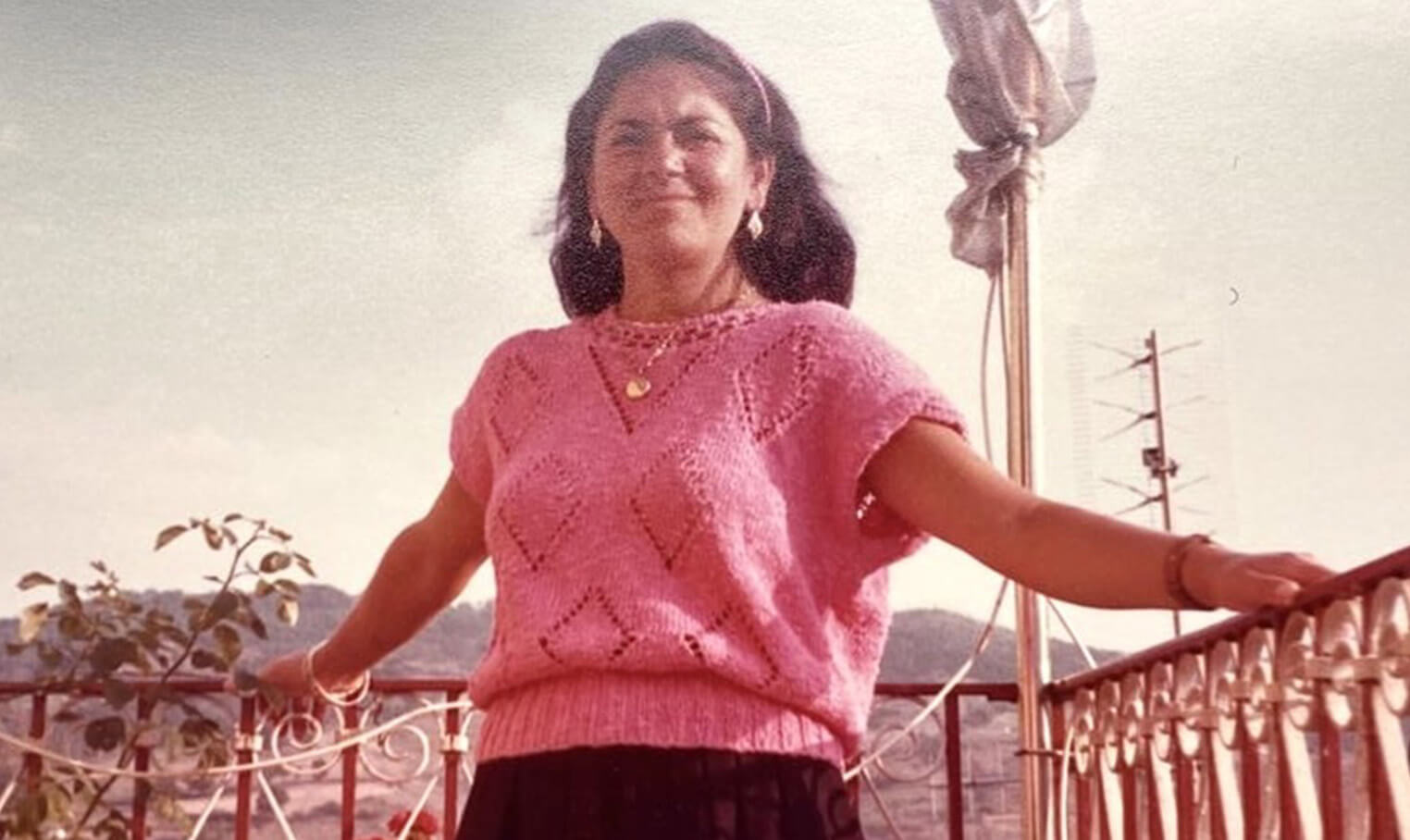
We met the family of Maria Domenica Smaldone – Mimma, as she was affectionately called by all who loved her – on a November day. There was a special atmosphere as her brother began to tell us her story: that of a woman who, for over 50 years, fought against a disease that progressively deprived her of all physical autonomy, yet never managed to touch her spirit. Through her siblings’ words, Mimma came to life before us, in her tenacity and humanity, and in that unique way she faced every pain without ever losing her zest for life.
But let’s start from the beginning.

Mimma was born in Calvello, a small town in Basilicata, in 1953. Her childhood was happy, serene, and carefree. Shyness was not part of her nature; on the contrary, she was very sociable and cheerful. She spent her days with friends wandering through the streets of the town, inventing games and dreaming about the future. At that time, nothing could have predicted what would happen a few years later.
At 16, thanks to an opportunity provided by an aunt in Milan, Mimma and her sister moved to the Lombard capital, driven by the desire to build a future for themselves. Milan, at that time, was a city in full swing, and Mimma experienced it with eyes full of wonder and ambition. She began working for an insurance company but felt she wanted more. Two years later, she decided to return to her studies, enrolling in a teaching institute. It seemed the start of a new phase full of promise, but soon something began to change.
Mimma started losing weight and feeling strange pains in her legs, accompanied by persistent fatigue. Her mother, somewhat worried, attributed it to the stress of their hectic Milanese life. But in January 1973, everything took a turn: during a gym class, she felt a sudden sharp pain in her calf, like a cold gust of wind. In the following days, she realized she could no longer rise onto her tiptoes; her leg seemed to be losing strength. What initially appeared to be a simple muscle strain soon revealed itself to be a much more serious problem. After several visits and uncertain diagnoses, Mimma was admitted for the first time to the then Ponti Pavilion at the Clinic of Nervous and Mental Diseases of the University of Milan – Ospedale Maggiore Policlinico, directed by Prof. Gildo Gastaldi, one of the most authoritative pioneers of modern neurology.
Hospitals at the time were not like today: high ceilings and grand staircases inspired awe in anyone crossing the threshold. The ward was a huge room, with thin curtains separating the patients. Yet, in that austere place, Mimma felt the warmth of a dedicated team of doctors and nurses.

Days passed, but instead of improving, her condition worsened. Every day, a different part of her body would fail: first her left leg, then her right, then her arms, and finally her tongue. The only relief the doctors could offer was a heavy dose of cortisone. The initial diagnosis was Guillain-Barré syndrome, a disease affecting the peripheral nervous system, but with a generally benign prognosis. She would recover soon, the doctors said. However, her body did not seem to agree. Her condition continued to deteriorate, and by the end of the summer of ’73, Mimma was completely paralyzed. The only thing the illness seemed unable to take from her was her willpower.
Step by step, thanks to intensive physiotherapy, Mimma began to recover, and after many months, she returned home. Although it was not a return to normalcy, it was a victory for her: she could finally reclaim a life that had seemed to slip away. From this harrowing and unexpected experience, Mimma drew a determination and tenacity that would accompany her for the rest of her life. She graduated and began working as a clerk in a school office, continuing to attend the Policlinico for physiotherapy to keep at bay the illness that refused to leave her entirely. Years of steady improvement and renewed hope followed. She enrolled in swimming and horseback riding, regaining her independence.
Her siblings recount how strong, yet strict, she had become: “When any of us had a problem, Mimma would reprimand us.” But her firmness was not harshness—it was realism. She knew that life can be ruthless, but giving in to fear was not an option.
However, in 1983, just when she thought the worst was behind her, the disease reappeared, affecting her left arm. Doctors spoke of neuritis, but no one could give a definitive diagnosis. It was as if her body were challenging her, forcing her to face new pain each time. Meanwhile, her personal life suffered: her boyfriend at the time, perhaps unable to accept the limitations imposed by her illness, left her. It was a harsh blow, but once again, Mimma found the strength to move forward. She returned to work, bought a home, and continued living independently.

Then, in 1999, the disease made itself felt more strongly, with tremors and a new decline that forced her into a long hospital stay. It was then that a different diagnosis arrived: it was not Guillain-Barré syndrome, but a very rare variant of SMA, spinal muscular atrophy, a severe neurodegenerative disease that affects the lower motor neurons. It was a moment of despair, yet once again Mimma responded with courage, seeking solutions and adapting to each new challenge without ever being overwhelmed. Over the years, she accepted giving up work, the help of caregivers, a tracheotomy, the ventilator, and eventually the use of an eye-tracking communicator to communicate. Each new setback might have broken someone else, but Mimma always found a way to keep moving forward. “She always tried to remain in control of her life until the very end,” her siblings tell us.
It was December 13, 2023, when Mimma passed away. But in truth, she never really left. Her memory and her example continue to live on in the hearts of her family and everyone who knew her. It is precisely to honor her extraordinary strength and her battle that her siblings decided to make a donation to our “Centro Dino Ferrari” to support SMA research.
Among the many forms of lower motor neuron diseases, genetic origins have been identified in recent years. For one of these forms—which unfortunately Mimma did not have—three new effective therapies have been developed, thanks in part to the work of researchers at the “Centro Dino Ferrari.” For others, research is still ongoing.
The hope is that soon, the work of our doctors and researchers will lead to the development of a cure, restoring a future to those who today struggle against this disease.
Sostieni la ricerca