




A New Headache Center is Born: A Step Forward in Migraine Care


At the Policlinico di Milano
a Center Dedicated to the Care and Management of Various Types
of Migraine and Headache.
Migraine is much more than just a headache. It is a complex neurological disorder, often disabling, that affects millions of people worldwide and represents one of the leading causes of disability globally. It manifests as intense pain, usually localized on one side of the head, accompanied by symptoms such as nausea, vomiting, sensitivity to light (photophobia), sound (phonophobia), and, in severe cases, visual or motor disturbances.
To respond more effectively to the needs of those living with these conditions, a new Headache Center has been established at the Policlinico di Milano, entirely dedicated to the diagnosis, treatment, and monitoring of different forms of headache.
The goal is to provide integrated care, taking into account the real impact that migraine and other headaches have on patients’ quality of life, while also contributing to scientific research to discover new solutions and improve existing treatments.
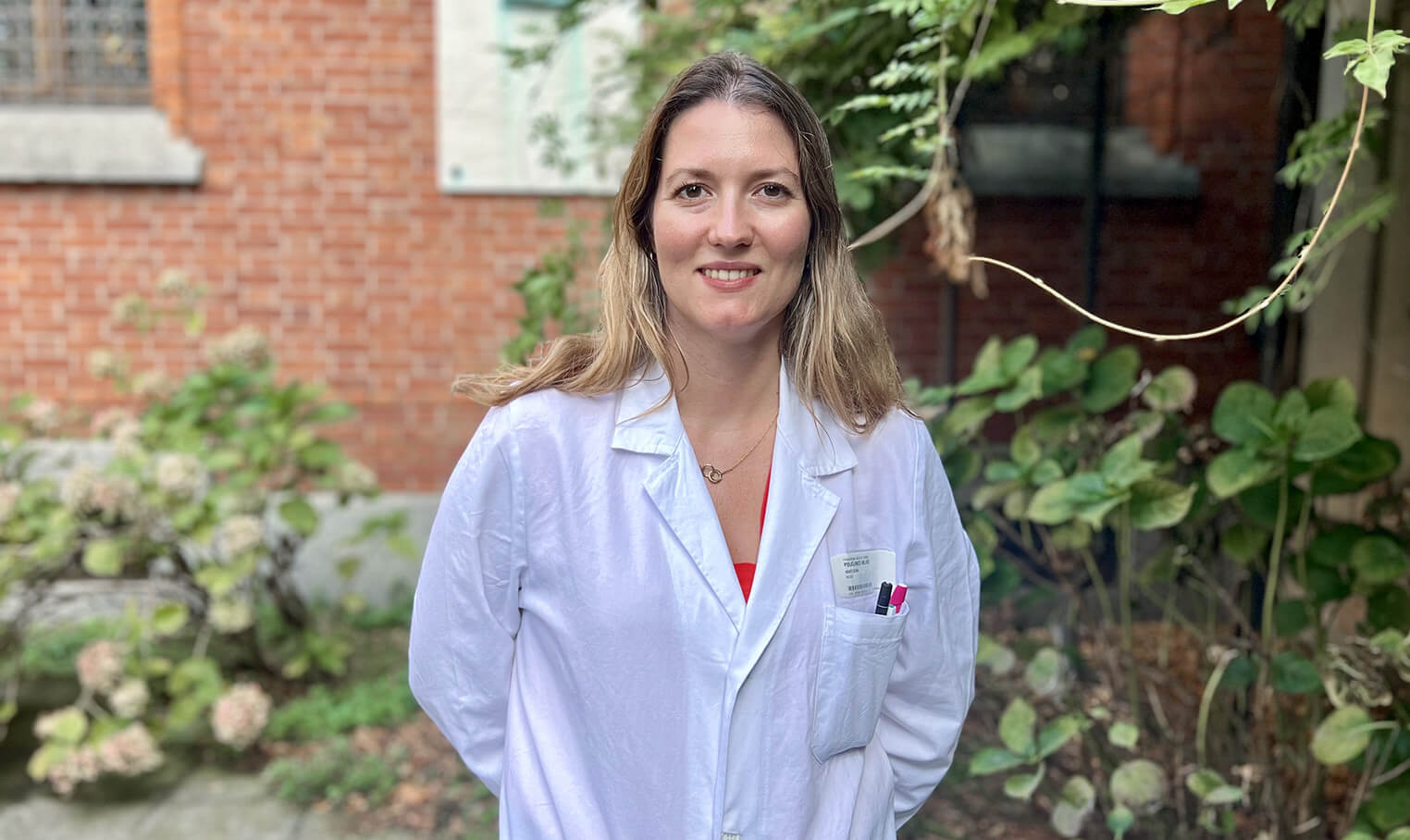
Interview with Dr. Elena Abati, specialist at the Headache Center coordinated by Prof.ssa Stefania Corti, Director of Neurology – Neuromuscular and Rare Diseases at “Centro Dino Ferrari” – University of Milan, Policlinico di Milano
Beyond a common headache, how can one understand if they suffer from a form of headache?
That headache that doesn’t go away, whose origin is unclear, and that one struggles to stop. There are many types of headaches, and different causes require specific responses. At the Policlinico di Milano, there is a clinic dedicated to the diagnosis and treatment of primary and secondary headaches. Dr. Elena Abati explains that this specialized approach helps identify the correct type of headache and provide tailored care.
What is meant by the term “headache,” and how many types exist?
Headache, in all its forms, is a frequent and potentially serious disorder. The key distinction is between secondary headaches – where head pain is a symptom of an underlying condition – and primary headaches, in which the pain and associated symptoms constitute a disease in themselves. Timely diagnosis allows for early recognition of secondary headaches, which can pose serious risks, and of various primary headaches, which, while not life-threatening, cause significant suffering and high social and healthcare costs.
Among primary headaches, migraine is of greatest interest. It is a chronic condition characterized by recurring attacks and is considered a neurovascular disorder involving central and peripheral nervous system mechanisms, leading to the release of vasoactive peptides at the meningeal level (trigeminovascular system). Like all chronic pain conditions, a psycho-emotional component may influence disease evolution and comorbidities.
How common is migraine?
Migraine has high prevalence in the general population, often beginning before age 40, affecting mainly young adults during peak productivity years. In Italy, the prevalence among adults is approximately 12% (around 1,200,000 people in Lombardy). Chronic migraine, defined as headache occurring 15 or more days per month, is estimated at 2–3% in Europe and the U.S.
Are there specific causes?
Migraine is considered a neurovascular pain syndrome with altered central neural processing and involvement of the trigeminovascular system. Triggers may include head trauma, neck pain, temporomandibular joint dysfunction, alcohol, fasting, bright lights, strong odors, weather changes, sleep deprivation, stress, and hormonal factors. Migraines are more common in women (3:1 ratio), except in rare forms such as cluster headache. Hormonal fluctuations strongly influence attack onset and severity.
Can it be considered a chronic disease?
Yes, migraine is chronic, with fluctuations over a lifetime. Lack of recognition and inadequate treatment often lead to worsening and chronicization. Studies show that only 27% of patients in specialized headache centers had a prior diagnosis, and fewer than 5% received appropriate preventive therapy. In Europe, about 50% of patients do not get correct diagnosis or treatment, increasing the risk of overuse of symptomatic medication.
Do headaches increase in summer?
Yes, in some patients migraine frequency rises in summer due to heat, prolonged natural light, and dehydration, which may trigger headaches.
How is the correct diagnosis reached?
Diagnosis is made by a neurologist based on thorough history-taking and neurological examination. Examination may include mental status, cranial nerves, fundus oculi, and palpation for trigger points. Suspicion of secondary headache may lead to further tests, primarily MRI without contrast, and angio-MRI if needed. Unnecessary imaging should be avoided.
What are the patient pathways after diagnosis?
Patients usually first consult their general practitioner, who may manage sporadic headaches. Persistent or refractory headaches, or those with “red flags,” are referred to a neurology clinic or Headache Center.
Since 2023, Lombardy has implemented the PERLA Project, defining structured care pathways for chronic primary headache patients within the regional network.
Accessing the Headache Center at Policlinico di Milano:
Specify code S75-C associated with the dedicated Headache Center for diagnosis and care.
Report symptoms to your general practitioner to evaluate a referral.
With a referral for “first neurological visit,” book via the Regional Toll-Free Number:
800.638.638 (landline)
02 99.95.99 (mobile)
Mon–Sat: 8:00–20:00
Sostieni la ricerca