



Spinal Muscular Atrophy: Rare Genetic Variants Identified in Affected Patients


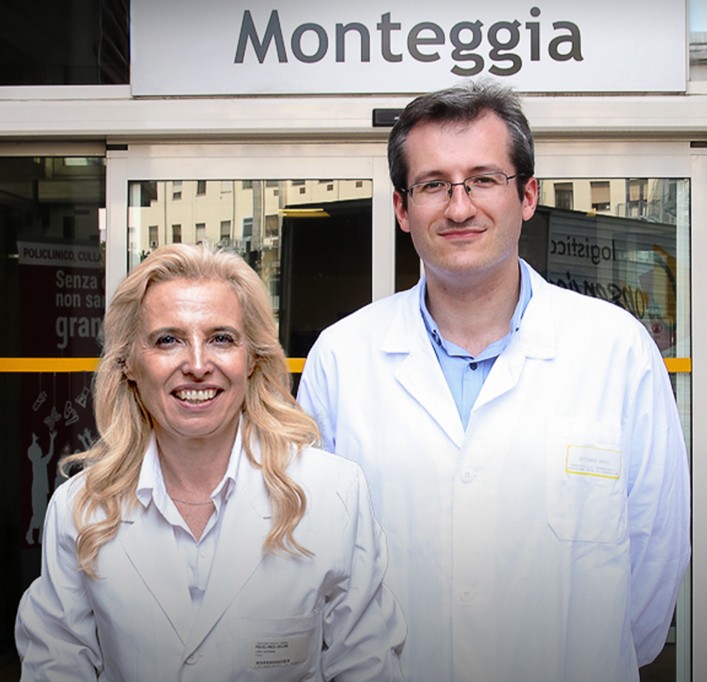
A major study led by Prof. Stefania Corti and Prof. Dario Ronchi at the Centro Dino Ferrari of the Università degli Studi di Milano and Policlinico di Milano has identified and characterized rare genetic variants in patients with Spinal Muscular Atrophy (SMA), a severe neuromuscular disease affecting motor neurons.
The research, led by Dr. Martina Rimoldi, a clinical geneticist at the Policlinico di Milano, and published in Neurology Genetics, analyzed 149 SMA patients over the past 20 years, identifying single-nucleotide variants in the SMN1 gene associated with heterozygous deletion in 5% of cases. This discovery is particularly significant in the era of new SMA therapies, as a complete genetic characterization is essential for treatment eligibility and understanding variations in therapeutic response.
“The identification of these rare variants is crucial for improving diagnosis and prognosis in SMA patients,” explains Prof. Stefania Corti, co-leader of the study. “With the advent of innovative therapies such as nusinersen, onasemnogene abeparvovec, and risdiplam, a precise and timely genetic diagnosis can make a real difference in a patient’s treatment journey.”
Prof. Dario Ronchi, co-coordinator of the research, emphasizes: “Our integrated diagnostic approach, combining quantitative techniques such as real-time PCR and direct sequencing, represents a paradigm shift in current guidelines. We recommend initiating therapy promptly in patients with heterozygous SMN1 deletions and a compatible clinical phenotype, without waiting for the completion of all molecular tests. It is important to highlight that currently, patients with rare variants may be missed by neonatal screening, potentially causing treatment delays—an issue that must be addressed through timely and comprehensive analyses in the future.”
Innovative Therapeutic Implications
The study has important therapeutic ramifications. Patients carrying missense variants such as p.(Tyr130Cys) exhibit milder phenotypes and may respond differently to available therapies compared to patients with nonsense variants. Additionally, the identification of modifier variants in the SMN2 gene, such as c.859G>C and c.835-44A>G, enables clinicians to:
- Personalize treatment: tailor the type and intensity of therapy based on the patient’s specific genetic profile.
- Predict therapeutic response: these variants can influence the effectiveness of nusinersen and risdiplam, which act by modulating SMN2 splicing.
- Optimize intervention timing: initiate reversible treatments like nusinersen or risdiplam immediately in suspected cases, without waiting for complete genetic characterization.
- Develop new therapeutic strategies: rare variants may require specific approaches or drug combinations tailored to the patient’s genotype.
Prof. Giacomo P. Comi, Director of the Centro Dino Ferrari, Director of Neurology at the Policlinico di Milano, and Full Professor at the Università degli Studi di Milano, emphasizes:
“These modifier variants help us better understand the phenotypic variability observed in patients and can guide personalized therapeutic decisions. The presence of variants like c.859G>C in homozygosity can significantly improve prognosis and influence the choice of the most appropriate treatment.”
Among the most significant findings, the study identified patients with SMN1/SMN2 hybrid genes, a rare condition that may escape standard screenings but carries specific therapeutic implications, underscoring the need for comprehensive and precise genetic diagnostics to optimize patient care.cifiche, come dimostrato dalla risposta positiva al trattamento con nusinersen in uno dei pazienti dello studio.
The Importance of Neonatal Screening and Early Diagnosis
The research emphasizes the importance of neonatal screening for SMA, already implemented in several Italian regions, and the need to adopt advanced molecular diagnostic approaches to identify even the rarest forms of the disease that escape traditional screening. Early diagnosis is essential because:
- Treatments are more effective if started before symptoms appear
- Gene therapies such as onasemnogene abeparvovec have optimal administration windows
- Motor neuron degeneration is irreversible, making timely intervention critical
The study was carried out with the valuable support of the Smaldone family, in memory of Maria Domenica Smaldone, whose contribution made this important research possible, with tangible benefits for many SMA patients and their families.
For more information:
“Centro Dino Ferrari”
Università degli Studi di Milano
Fondazione IRCCS Ca’ Granda Ospedale Maggiore Policlinico
Via Francesco Sforza, 35 – 20122 Milano, Italyilano
Email: stefania.corti@unimi.it
Sostieni la ricerca