

The brain in a drop: a new research line on extracellular vesicles for Alzheimer’s studies launched thanks to REPOWER funding


UA new project dedicated to the study of extracellular vesicles as potential biomarkers for Alzheimer’s disease has been launched at our “Centro Dino Ferrari” of the University of Milan – Policlinico Hospital of Milan. Its initiation was made possible thanks to the valuable support from REPOWER.
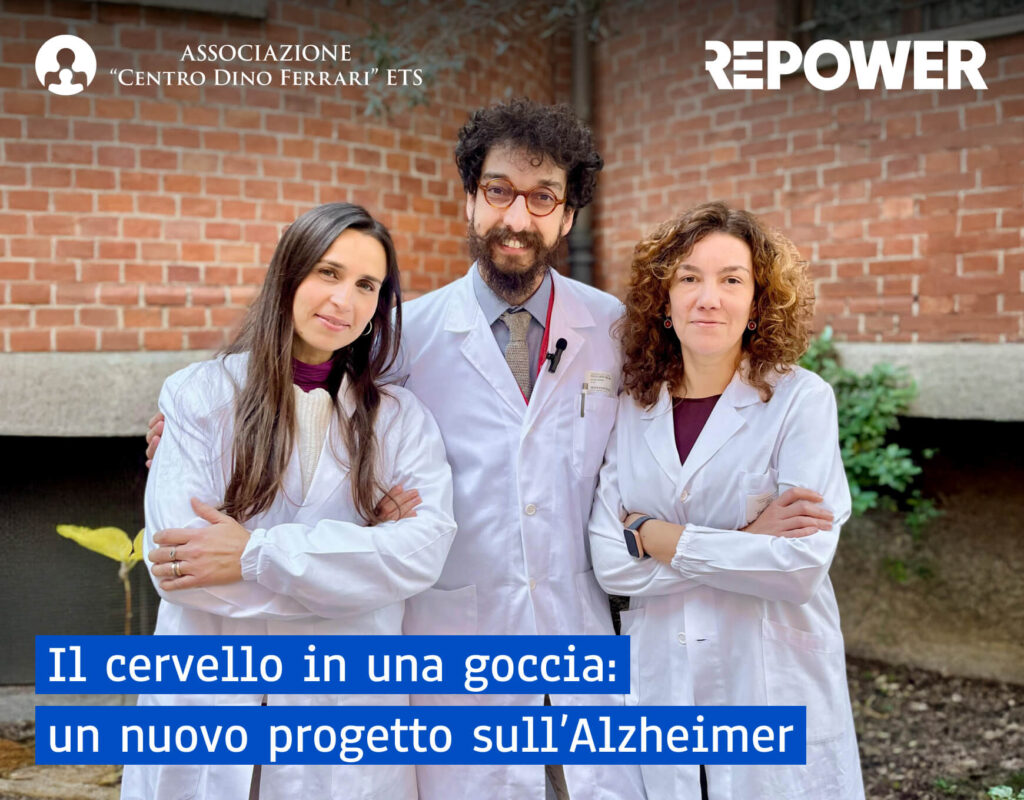
The study, coordinated by Dr. Andrea Arighi, aims to use these vesicles as biomarkers to detect the disease in its early stages, monitor its progression, and, in the future, enable more targeted interventions for a condition as widespread as it is debilitating.
Alzheimer’s disease is indeed one of the most painful and widespread challenges of our time (Scheltens et al., 2021). It affects millions of people worldwide, erasing memories, relationships, and identity — and leaves a deep mark on those who remain close, including families, caregivers, and society as a whole, which confronts the fragility of memory and time every day.
Yet, behind this loss, research continues to seek new paths to restore hope, to understand what happens in the brain’s invisible circuits, and to find ways to halt, or at least slow, the process that leads to the disease.
Today, that hope passes through something infinitely small: extracellular vesicles, microscopic particles released by every cell in our body to communicate with others (Sigdel Set al., 2023).
Within each vesicle lie fragments of information — proteins, lipids, RNA — reflecting the state of the cell from which they originate. In the blood and even in saliva, these vesicles carry messages that reach the brain and originate from it: tiny traces of neuronal activity, signs of inflammation, or cellular stress.
Analyzing them allows for a sort of “liquid brain biopsy,” capable of revealing what is happening in the nervous system without invasive procedures.
A single drop of blood or saliva can therefore contain valuable clues about the brain’s health — the brain in a drop, so to speak.
The project, launched within the “Centro Dino Ferrari” at the Fondazione IRCCS Ca’ Granda Ospedale Maggiore Policlinico of Milan, explores this new biological language.
The goal is to transform extracellular vesicles into diagnostic and therapeutic keys for Alzheimer’s disease:
- Identify early biomarkers capable of signaling the onset of the disease before symptoms appear;
- Determine which patients with initial cognitive difficulties are at higher risk of progressing to full-blown Alzheimer’s;
- Use the vesicles themselves as natural drug carriers, to protect neurons and modulate inflammatory responses.
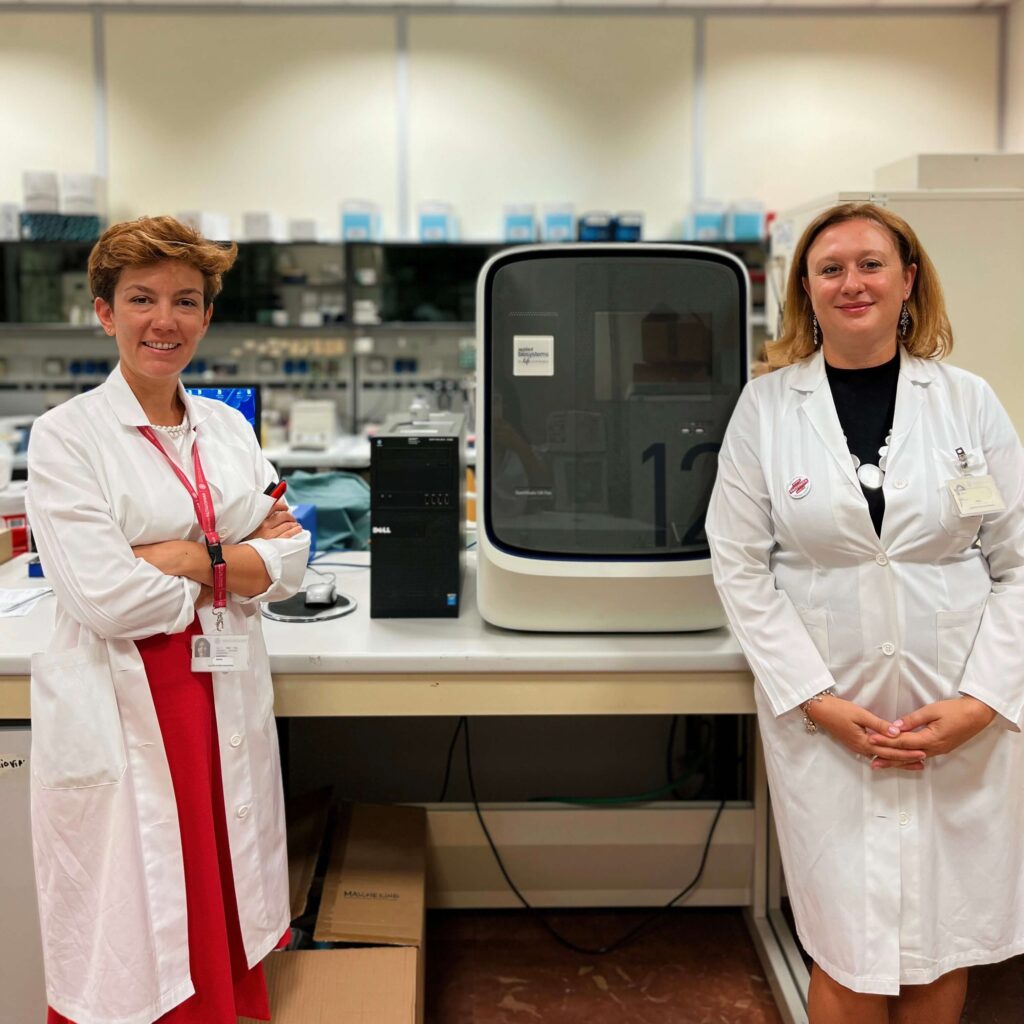
To make all this possible, the laboratory requires a new extracellular vesicle isolation system, a high-precision instrument that allows these tiny particles to be separated and analyzed in a reproducible and reliable way.
A significant portion of the budget — €15,000 — will be allocated to this investment, which will accelerate the identification of vesicles, paving the way for future studies and large-scale clinical collaborations.
Every step forward in this direction represents an act of hope: for those living with the disease, for those who accompany them every day, and for all who believe in a science capable of restoring meaning and memory.
Inside a drop, today, research tries to listen to the voice of the brain — a voice that could, one day, teach us how to heal it.
Thanks to this project, the lives of many people awaiting answers could truly change. A caregiver shares their testimony:
“I want to sincerely thank Dr. Andrea Arighi and his team (especially the neurologists and neuropsychologists) at the Dino Ferrari Center. I am a physician, but in this case I am writing as a family member of someone very dear to me, who has been under Dr. Arighi and his team’s care for years. In a journey often full of uncertainty, fear, and even suffering, from the very first meeting with the colleagues, I experienced the certainty of being followed with the highest level of scientific care available today, together with great humanity — never sentimental, but always welcoming. For a caregiver, this means not feeling alone or, worse, desperate. I can say that I have learned a lot even as a doctor from this journey with the “Centro Dino Ferrari“. The presence of this team does not remove all the weight that the disease brings, but it makes you feel accompanied and supported along the way. As Tolkien writes in The Lord of the Rings, in one of the final parts of the book, ‘I cannot carry the Ring for you, but I can carry you,’ this has been the precious experience as a caregiver in certain moments, which I hope to bring into my work as well.”
We are deeply grateful to REPOWER for the support provided, which contributes in a concrete way to improving the diagnosis and treatment of Alzheimer’s disease.
Continue to support us too, to help us carry on this work and give new hope to patients!
Support the research